The Biology of Grief: A Glitch in the Prediction Machineशोक का जीवविज्ञान: “प्रिडिक्शन मशीन” में एक ग्लिच
Why grief is not just an emotion, but a physical withdrawal symptom of the brain. It is your biology trying to solve an impossible math problem.क्यों शोक केवल एक भावना नहीं है, बल्कि मस्तिष्क का एक शारीरिक 'विदड्रॉल' लक्षण है। यह आपका शरीर है जो एक असंभव गणितीय समस्या को हल करने की कोशिश कर रहा है।
Advertisement
Executive Summary (1 Minute Read)कार्यकारी सारांश (1 मिनट में पढ़ें)
Grief is Biological: It is not a weakness; it is a structural failure in the brain's prediction system.
शोक जैविक है: यह कमजोरी नहीं है; यह मस्तिष्क की भविष्यवाणी प्रणाली में एक संरचनात्मक विफलता है।
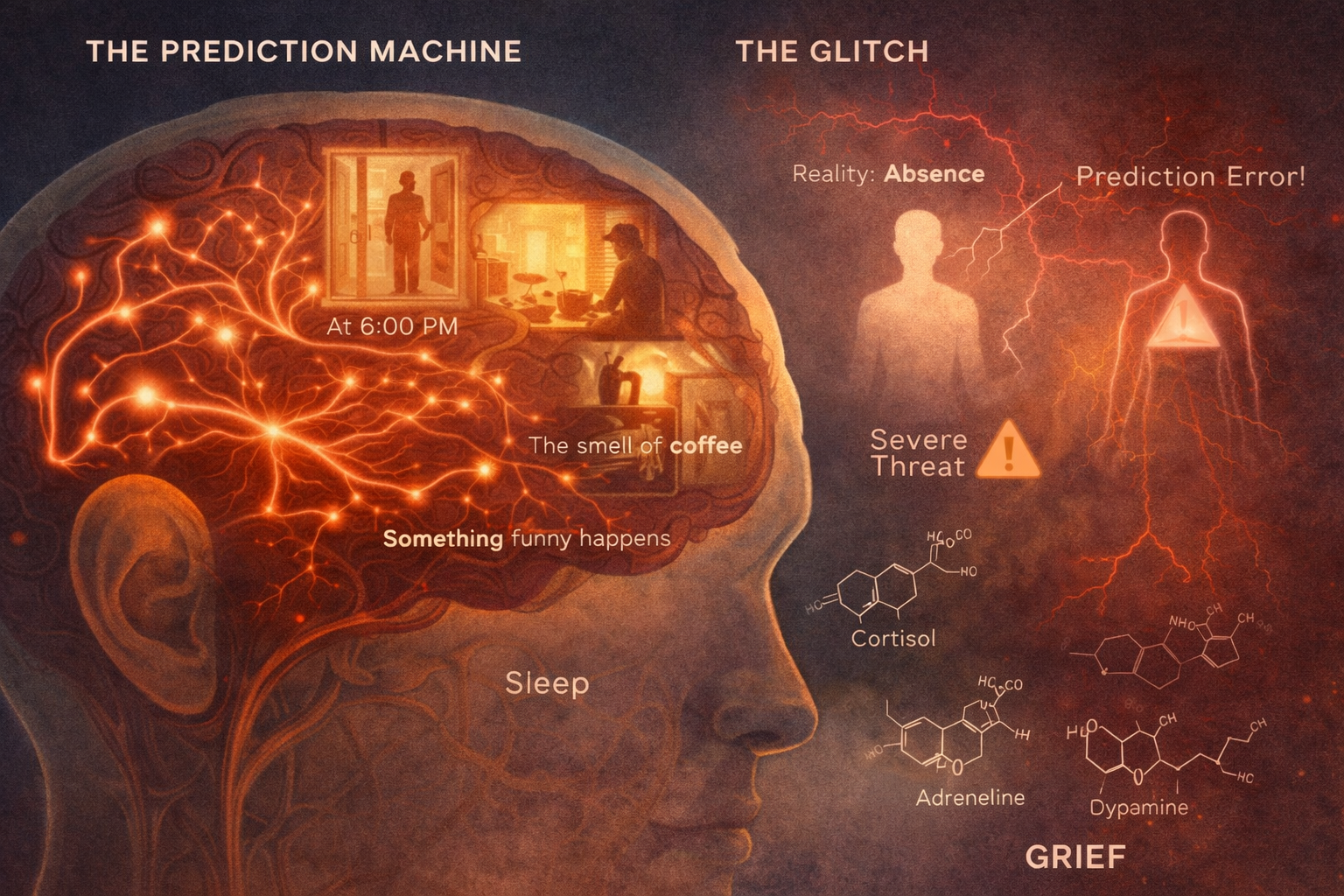
The Glitch: Your brain predicts their presence (door opening, coffee smell), but reality delivers absence. This creates a "Prediction Error."
गड़बड़ी (The Glitch): आपका दिमाग उनकी उपस्थिति की भविष्यवाणी करता है, लेकिन वास्तविकता अनुपस्थिति देती है। यह "भविष्यवाणी त्रुटि" पैदा करता है।
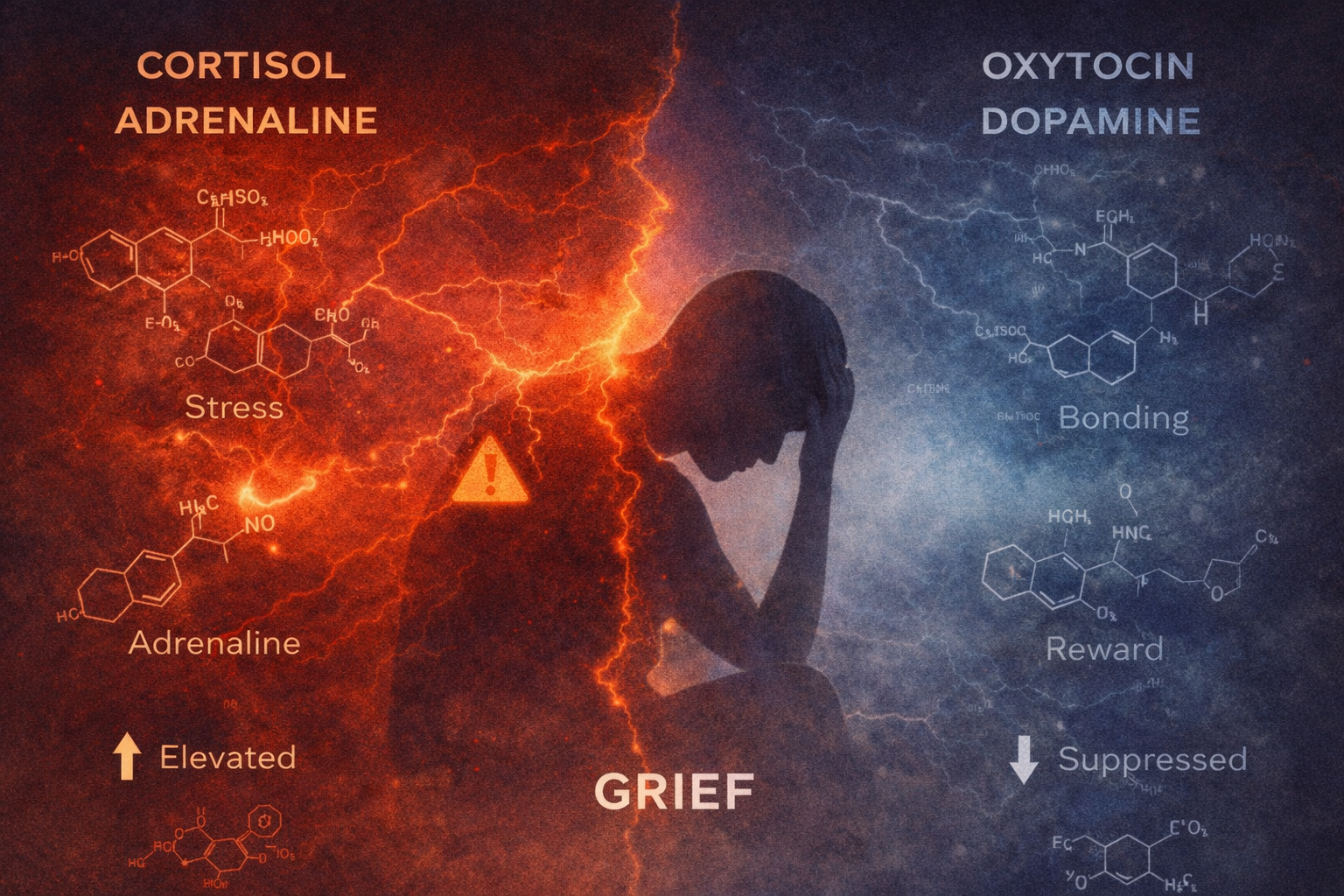
The Pain: This error triggers stress hormones (Cortisol) and cuts off bonding hormones (Oxytocin), causing physical pain.
दर्द: यह त्रुटि तनाव हार्मोन (कोर्टिसोल) को ट्रिगर करती है और बॉन्डिंग हार्मोन (ऑक्सीटोसिन) को काट देती है, जिससे शारीरिक दर्द होता है।
The Cure: You cannot "think" your way out. You need Rituals (to update the brain map) and Connection (to restore oxytocin).
इलाज: आप "सोचकर" बाहर नहीं निकल सकते। आपको अनुष्ठान (दिमाग का नक्शा अपडेट करने के लिए) और कनेक्शन (ऑक्सीटोसिन बहाल करने के लिए) की आवश्यकता है।
1. THE WHY: Your Brain is a Lazy Prediction Machine1. क्यों: आपका दिमाग एक "आलसी भविष्यवाणी मशीन" है
We often think we see the world as it is. But neuroscience tells us we see the world as we expect it to be. To conserve energy, your brain doesn't constantly analyze every detail from scratch. Instead, it builds massive, complex mental maps based on past experiences to predict the future.
The Architecture of Attachment:
If you lived with someone for twenty years, your brain has physical neural pathways dedicated to predicting their presence. It is not just a thought; it is biology. It has optimized itself around their existence.
At 6:00 PM, specific neurons fire to predict the sound of their key in the door.
When you smell coffee, neurons predict seeing them in the kitchen.
When something funny happens, your motor neurons predict turning your head to share the joke with them.
These aren't just habits. These are deep, entrenched biological grooves in your neural architecture. Your brain has literally built its world model on the foundation that they exist.
हम अक्सर सोचते हैं कि हम दुनिया को वैसा ही देखते हैं जैसी वह है। लेकिन तंत्रिका विज्ञान (neuroscience) हमें बताता है कि हम दुनिया को वैसा देखते हैं जैसा हम उम्मीद करते हैं। ऊर्जा बचाने के लिए, आपका दिमाग हर विवरण का नए सिरे से विश्लेषण नहीं करता है। इसके बजाय, यह भविष्य की भविष्यवाणी करने के लिए पिछले अनुभवों के आधार पर विशाल, जटिल मानसिक मानचित्र बनाता है।
लगाव की वास्तुकला (Architecture of Attachment):
यदि आप बीस साल तक किसी के साथ रहे, तो आपके दिमाग में उनकी उपस्थिति की भविष्यवाणी करने के लिए शारीरिक तंत्रिका मार्ग (neural pathways) बन जाते हैं। यह केवल एक विचार नहीं है; यह जीवविज्ञान है। इसने खुद को उनके अस्तित्व के इर्द-गिर्द अनुकूलित कर लिया है।
शाम 6:00 बजे, विशिष्ट न्यूरॉन्स दरवाजे में उनकी चाबी की आवाज की भविष्यवाणी करने के लिए फायर होते हैं।
जब आप कॉफी की गंध लेते हैं, तो न्यूरॉन्स उन्हें रसोई में देखने की भविष्यवाणी करते हैं।
जब कुछ मजेदार होता है, तो आपके मोटर न्यूरॉन्स भविष्यवाणी करते हैं कि आप उन्हें चुटकुला सुनाने के लिए अपना सिर घुमाएंगे।
ये केवल आदतें नहीं हैं। ये आपकी तंत्रिका वास्तुकला में गहरी, entrenched जैविक नालियाँ हैं। आपके मस्तिष्क ने सचमुच अपनी दुनिया का मॉडल इस आधार पर बनाया है कि वे मौजूद हैं।
Figure 1: The brain builds a map. Losing a person is like losing a structural part of that map.चित्र 1: मस्तिष्क एक नक्शा बनाता है। किसी व्यक्ति को खोना उस नक्शे का एक संरचनात्मक हिस्सा खोने जैसा है।
Advertisement
2. THE HOW: The "Prediction Error" and The Crash2. कैसे: "भविष्यवाणी त्रुटि" और सिस्टम क्रैश
Here lies the core of the pain. When that person dies, the external reality changes instantly. But your internal biological map does not change instantly. It takes months or years to rewire neural pathways.
For a long time, your brain continues to fire those old prediction pathways. It expects them to walk through the door. It expects a reply to your text. But reality delivers empty space.
The Result: A Massive "Prediction Error."
The brain interprets this error—this gap between expectation and reality—as a severe threat to your survival. It panics. This triggers two biological events simultaneously:
The Cortisol Surge (The Stress): The brain floods your body with stress hormones (Cortisol and Adrenaline). This puts your body in a state of high inflammation. It causes a racing heart, digestive issues, and the feeling of "fight or flight." You feel anxious and restless because your body is biologically screaming that something is wrong.
The Oxytocin Crash (The Withdrawal): You suddenly lose the source of your bonding hormones (Oxytocin and Dopamine). You go into immediate chemical withdrawal, exactly like a drug addict quitting heroin. This causes the physical ache, the "skin hunger," and the deep, hollow sadness.
This is why grief feels physical. The "heavy chest" is real intercostal muscle tension caused by stress. The "brain fog" is your brain using all its metabolic energy to process the error, leaving little energy for daily tasks. You are not crazy; you are in withdrawal.
दर्द का मूल यहीं है। जब उस व्यक्ति की मृत्यु होती है, तो बाहरी वास्तविकता तुरंत बदल जाती है। लेकिन आपका आंतरिक जैविक नक्शा तुरंत नहीं बदलता। तंत्रिका मार्गों (neural pathways) को फिर से जोड़ने में महीनों या साल लगते हैं।
लंबे समय तक, आपका दिमाग उन पुराने भविष्यवाणी मार्गों को फायर करना जारी रखता है। यह उम्मीद करता है कि वे दरवाजे से आएंगे। यह आपके टेक्स्ट का जवाब मिलने की उम्मीद करता है। लेकिन वास्तविकता खाली जगह देती है।
परिणाम: एक विशाल "भविष्यवाणी त्रुटि" (Prediction Error)।
मस्तिष्क इस त्रुटि को—उम्मीद और वास्तविकता के बीच के इस अंतर को—आपके अस्तित्व के लिए एक गंभीर खतरे के रूप में व्याख्या करता है। यह घबरा जाता है। यह एक साथ दो जैविक घटनाओं को ट्रिगर करता है:
कोर्टिसोल की बाढ़ (तनाव): मस्तिष्क आपके शरीर को तनाव हार्मोन (कोर्टिसोल और एड्रेनालाईन) से भर देता है। यह आपके शरीर को उच्च सूजन (inflammation) की स्थिति में डाल देता है। इससे तेज धड़कन, पाचन संबंधी समस्याएं और "लड़ो या भागो" की भावना पैदा होती है। आप चिंतित और बेचैन महसूस करते हैं क्योंकि आपका शरीर जैविक रूप से चिल्ला रहा है कि कुछ गलत है।
ऑक्सीटोसिन क्रैश (विदड्रॉल): आप अचानक अपने बॉन्डिंग हार्मोन (ऑक्सीटोसिन और डोपामाइन) के स्रोत को खो देते हैं। आप तत्काल रासायनिक विदड्रॉल में चले जाते हैं, ठीक उसी तरह जैसे कोई ड्रग एडिक्ट हेरोइन छोड़ता है। यह शारीरिक दर्द, "स्किन हंगर" (छूने की लालसा) और गहरी, खोखली उदासी का कारण बनता है।
यही कारण है कि शोक शारीरिक महसूस होता है। "भारी छाती" तनाव के कारण वास्तविक मांसपेशियों का तनाव है। "ब्रेन फॉग" इसलिए है क्योंकि आपका दिमाग त्रुटि को संसाधित करने के लिए अपनी सारी ऊर्जा का उपयोग कर रहा है, जिससे दैनिक कार्यों के लिए बहुत कम ऊर्जा बचती है। आप पागल नहीं हैं; आप विदड्रॉल में हैं।
Figure 2: The chemical crash: Stress hormones rise, bonding hormones fall.चित्र 2: रासायनिक दुर्घटना: तनाव हार्मोन बढ़ते हैं, बॉन्डिंग हार्मोन गिरते हैं।
3. THE SOLUTION: Rituals as Neuro-Therapy3. समाधान: न्यूरो-थेरेपी के रूप में अनुष्ठान
If grief is a biological wound, platitudes like "time heals all wounds" or "stay positive" are useless band-aids. You cannot psychologically talk your way out of a biological reality. The book The Autopsy of Unspent Love suggests the solution lies in working with the biology, not against it.
A. Rituals Update the Map
The brain cannot instantly delete twenty years of pathways. It needs data points to update the map. This is where Rituals (like Tarpan, funerals, lighting a candle, or writing letters) serve a biological purpose.
Rituals act as "actionable data" for the brain. They help the brain slowly transition the person from the category of "Living, Expected Presence" to "Ancestor, Cherished Memory." Rituals provide closure to the open loops in the brain that are still waiting for the person to come home. By performing a physical act, you are teaching your brain the new reality in a language it understands.
B. The Oxytocin Antidote
Since the wound is caused by a loss of connection (loss of oxytocin), the cure must involve connection. Isolation feeds the inflammation.
This doesn't mean replacing the person. It means connecting with the living:
Service ("Secret Seva"): Helping others releases dopamine and oxytocin.
Physical Touch: Hug your children, friends, or even a pet to satisfy "Skin Hunger" (Chapter 18).
Nature: Connecting with the earth can lower cortisol levels.
You must artificially supply the oxytocin your brain is starving for to calm the stress response.
यदि शोक एक जैविक घाव है, तो "समय सभी घावों को भर देता है" या "सकारात्मक रहें" जैसी बातें बेकार बैंड-एड हैं। आप मनोवैज्ञानिक रूप से बात करके जैविक वास्तविकता से बाहर नहीं निकल सकते। किताब The Autopsy of Unspent Love बताती है कि समाधान जीवविज्ञान के साथ काम करने में है, उसके खिलाफ नहीं।
A. अनुष्ठान (Rituals) नक्शे को अपडेट करते हैं
दिमाग बीस साल के रास्तों को तुरंत हटा नहीं सकता। नक्शे को अपडेट करने के लिए इसे डेटा पॉइंट की आवश्यकता होती है। यहीं पर अनुष्ठान (जैसे तर्पण, अंतिम संस्कार, मोमबत्ती जलाना, या पत्र लिखना) एक जैविक उद्देश्य पूरा करते हैं।
अनुष्ठान मस्तिष्क के लिए "डेटा" के रूप में कार्य करते हैं। वे मस्तिष्क को धीरे-धीरे व्यक्ति को "जीवित उपस्थिति" की श्रेणी से "पैतृक स्मृति" (Ancestor) में स्थानांतरित करने में मदद करते हैं। अनुष्ठान मस्तिष्क में उन खुले लूपों को बंद करने में मदद करते हैं जो अभी भी उस व्यक्ति के घर आने का इंतजार कर रहे हैं। शारीरिक क्रिया करके, आप अपने मस्तिष्क को नई वास्तविकता उस भाषा में सिखा रहे हैं जिसे वह समझता है।
B. ऑक्सीटोसिन एंटीडोट
चूंकि घाव कनेक्शन के नुकसान (ऑक्सीटोसिन की हानि) के कारण होता है, इसलिए इलाज में कनेक्शन शामिल होना चाहिए। अलगाव (Isolation) सूजन को बढ़ाता है।
इसका मतलब व्यक्ति को बदलना नहीं है। इसका मतलब है जीवित लोगों से जुड़ना:
सेवा ("गुप्त सेवा"): दूसरों की मदद करने से डोपामाइन और ऑक्सीटोसिन निकलता है।
शारीरिक स्पर्श: "स्किन हंगर" (अध्याय 18) को संतुष्ट करने के लिए अपने बच्चों, दोस्तों या यहां तक कि एक पालतू जानवर को गले लगाएं।
प्रकृति: पृथ्वी से जुड़ने से कोर्टिसोल का स्तर कम हो सकता है।
तनाव प्रतिक्रिया को शांत करने के लिए आपको कृत्रिम रूप से उस ऑक्सीटोसिन की आपूर्ति करनी होगी जिसके लिए आपका मस्तिष्क भूखा है।
Figure 3: Rituals close the open loops in the brain, allowing the map to update.चित्र 3: अनुष्ठान मस्तिष्क में खुले लूप को बंद करते हैं, जिससे नक्शा अपडेट हो जाता है।
The Verdictनिष्कर्ष
"You don't heal from grief by forgetting. You heal by allowing your brain the time, space, and rituals it needs to painfully, slowly redraw the map of your world without them in it. Be patient with your biology."
"आप शोक से भूलकर ठीक नहीं होते। आप ठीक होते हैं जब आप अपने दिमाग को वह समय, स्थान और अनुष्ठान देते हैं जिसकी उसे दर्दनाक रूप से, धीरे-धीरे, उनके बिना आपकी दुनिया का नक्शा फिर से बनाने के लिए आवश्यकता होती है। अपनी जीवविज्ञान (biology) के साथ धैर्य रखें।"
Advertisement
This article is an excerpt from the book:यह लेख इस पुस्तक का एक अंश है:
Share your story or ask a question. Enter phone number to share via WhatsApp.अपनी कहानी साझा करें या कोई प्रश्न पूछें। व्हाट्सएप पर शेयर करने के लिए फोन नंबर डालें।